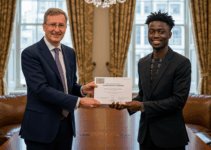
Fully funded USA grants with visa sponsorship for 2025 offer international students and professionals a once-in-a-lifetime chance to pursue education or career opportunities in one of the world’s most dynamic countries. These programs, backed by the U.S. government, universities, and private organizations, cover tuition, living costs, travel, and visa fees, making the American dream accessible.
This comprehensive guide explores the best grants, visa options, eligibility, application steps, and tips to help you seize these transformative opportunities in 2025.
Why the USA Offers Fully Funded Grants with Visa Sponsorship
The United States is a global leader in education and innovation, home to top universities like Stanford, MIT, and Yale, and thriving industries like technology, healthcare, and finance. However, high tuition fees ($20,000–$60,000/year) and living costs ($15,000–$30,000/year) can be a barrier for international talent. To attract brilliant minds and address labor shortages, the U.S. government, universities, and private organizations offer fully funded grants paired with visa sponsorship, such as F-1 student visas for academics and H-1B visas for professionals. These programs support the U.S. economy, which benefits from over $40 billion annually from international students and billions more from skilled workers.
These grants and visas open doors to world-class education, high-paying careers, and a vibrant cultural experience in cities like New York, Boston, or San Francisco. Whether you’re a student from Nigeria, India, or Brazil, or a professional seeking opportunities, these programs make studying or working in the USA affordable and legally seamless.
Understanding Fully Funded Grants and Visa Sponsorship
What Are Fully Funded Grants?
Fully funded grants are financial awards that cover all major expenses, including tuition, living costs (rent, food, transport), travel (flights to the USA), health insurance, and sometimes visa fees. Unlike loans, grants don’t need to be repaid. They support undergraduate, master’s, PhD, or professional programs and are offered by government bodies, universities, or private organizations like the Fulbright Program.
What Is Visa Sponsorship?
Visa sponsorship allows international students or professionals to legally study or work in the USA:
- F-1 Student Visa: For full-time students at accredited institutions. Sponsorship comes from universities issuing a Form I-20, required for the visa application. The visa lasts for the program duration plus Optional Practical Training (OPT) periods.
- H-1B Visa: For skilled professionals in specialty occupations (e.g., tech, healthcare). Sponsorship comes from employers issuing a Labor Condition Application (LCA). The visa is valid for up to 3 years, extendable to 6 years.
How Do Grants and Visa Sponsorship Work Together?
Grants and visa sponsorship combine to remove financial and legal barriers. For example, a Fulbright Scholarship covers tuition, living expenses, and flights, while the sponsoring university issues an I-20 for an F-1 visa. Similarly, an employer offering a research grant provides an LCA for an H-1B visa. This synergy ensures you can focus on your studies or career without worrying about costs or immigration challenges.
Why the USA Needs International Talent
The U.S. economy thrives on diversity and innovation, with international students and professionals contributing significantly. Students add over $40 billion annually through tuition and local spending, while professionals fill critical roles in tech, healthcare, and engineering, addressing labor shortages. In 2025, the USA aims to attract over 1 million international students and thousands of skilled workers to maintain its global leadership. Fully funded grants and visa sponsorship attract talent from countries like India, China, Nigeria, and beyond, fostering academic excellence and economic growth.
Top Fully Funded Grants with Visa Sponsorship for 2025
Grants for F-1 Visa Holders (Students)
These grants support students and include F-1 visa sponsorship through university-issued I-20 forms:
1. Fulbright Foreign Student Program
- Purpose: Funds graduate studies (master’s, PhD) or research for students from 160+ countries.
- Amount: Covers full tuition ($20,000–$60,000/year), living stipend ($15,000–$30,000/year), flights, health insurance, and visa fees.
- Eligibility: Bachelor’s degree, strong academic record, English proficiency (TOEFL 80+ or IELTS 6.5+), leadership potential.
- Visa Support: F-1 visa sponsorship via university I-20.
- Why Apply?: Prestigious program with global networking and career opportunities.
2. Knight-Hennessy Scholars (Stanford University)
- Purpose: Funds graduate studies at Stanford for global leaders.
- Amount: Covers full tuition, living stipend ($45,000/year), travel, and visa costs.
- Eligibility: Admission to Stanford, exceptional academics, leadership skills.
- Visa Support: F-1 visa sponsorship via Stanford’s I-20.
- Why Apply?: Fully funds studies at a top-tier university with leadership training.
3. Hubert Humphrey Fellowship
- Purpose: Funds a 10-month non-degree program for mid-career professionals from developing countries.
- Amount: Covers tuition, living expenses ($15,000–$25,000), travel, and visa fees.
- Eligibility: 5+ years of professional experience, bachelor’s degree, leadership potential.
- Visa Support: J-1 visa sponsorship (exchange visitor, often convertible to F-1 for further studies).
- Why Apply?: Enhances professional skills with U.S. exposure.
4. AAUW International Fellowships
- Purpose: Supports women from any country for graduate or postgraduate studies.
- Amount: $18,000–$30,000 for tuition, living costs, and travel.
- Eligibility: Women, enrolled in a U.S. graduate program, strong academics.
- Visa Support: F-1 visa sponsorship via university I-20.
- Why Apply?: Empowers women in academia with generous funding.
5. MPOWER Global Citizen Scholarship
- Purpose: Funds international students at MPOWER partner universities.
- Amount: Up to $10,000 for tuition or living costs, sometimes paired with university grants for full funding.
- Eligibility: Enrolled at an MPOWER partner school, strong academics.
- Visa Support: F-1 visa sponsorship via university I-20.
- Why Apply?: Flexible funding for diverse academic fields.
Grants for H-1B Visa Holders (Professionals)
These grants support professionals in specialty occupations, paired with H-1B visa sponsorship:
1. National Institutes of Health (NIH) Research Grants
- Purpose: Funds research in health, medicine, or biotechnology.
- Amount: $50,000–$1 million for projects or fellowships.
- Eligibility: Employed in a research role, innovative proposal, H-1B eligibility.
- Visa Support: H-1B sponsorship from universities or research institutions.
- Why Apply?: Supports cutting-edge medical research with substantial funding.
2. National Science Foundation (NSF) Grants
- Purpose: Funds research in science, technology, engineering, or mathematics (STEM).
- Amount: $25,000–$500,000 for projects or career development.
- Eligibility: Employed in a STEM role, strong research proposal.
- Visa Support: H-1B sponsorship from universities or employers.
- Why Apply?: Fuels innovation in high-demand STEM fields.
3. U.S. Department of Energy (DOE) Grants
- Purpose: Supports energy, technology, or environmental research.
- Amount: $50,000–$2 million for projects or startups.
- Eligibility: Employed in a relevant field, innovative project, H-1B eligibility.
- Visa Support: H-1B sponsorship from research institutions or companies.
- Why Apply?: Funds sustainable energy solutions with career growth.
4. Industry-Specific Grants (e.g., Tech, Healthcare)
- Purpose: Supports professionals in high-demand sectors like IT or nursing.
- Amount: $10,000–$200,000 for training, relocation, or projects.
- Eligibility: Job offer in a shortage occupation, relevant qualifications.
- Visa Support: H-1B sponsorship from employers like Google, Amazon, or hospitals.
- Why Apply?: Boosts careers in competitive industries.
Eligibility Criteria for Grants and Visa Sponsorship
For F-1 Visa Holders (Students)
- Education: Admission to an accredited U.S. institution for a full-time program.
- Academic Performance: Strong grades (e.g., GPA 3.0+ or equivalent).
- Language Proficiency: TOEFL 80+ or IELTS 6.5+ (some programs accept university interviews).
- Financial Proof: Proof of funds ($15,000–$30,000/year for living expenses), often waived for fully funded grants.
- Health and Character Checks: Clean criminal record, medical clearance (if required).
- Form I-20: Issued by the sponsoring university.
- Additional Requirements: Leadership potential (e.g., Fulbright), financial need (e.g., AAUW), or research focus (e.g., Knight-Hennessy).
For H-1B Visa Holders (Professionals)
- Education: Bachelor’s degree or equivalent in a relevant field (e.g., computer science, medicine). Some roles accept experience in lieu of a degree.
- Experience: 1–3 years in a skilled role (preferred, not always mandatory).
- Language Proficiency: Functional English (assessed via employer interview or tests).
- Job Offer: Offer from a U.S. employer with an H-1B sponsor license, including a Labor Condition Application (LCA).
- Salary Threshold: Minimum $60,000/year or industry standard.
- Health and Character Checks: Clean criminal record, medical clearance (if required).
A strong application package is critical, including:
- Academic transcripts or professional certifications.
- Recommendation letters (2–3) from professors or employers.
- Personal statement or project proposal (500–1,000 words).
- CV showcasing achievements, skills, or experience.
Visa Options: F-1 and H-1B Details
F-1 Student Visa
- Purpose: Allows full-time study at accredited U.S. institutions.
- Duration: Program length plus 60 days post-completion, extendable with Optional Practical Training (OPT, 1–3 years for STEM).
- Cost: $185 SEVIS fee + $160 visa fee, often covered by grants.
- Work Rights: Up to 20 hours/week on-campus, full-time during holidays, and OPT post-graduation.
- Pathway: Leads to OPT, then H-1B or other work visas, and potentially permanent residency.
H-1B Visa
- Purpose: Supports professionals in specialty occupations (e.g., tech, healthcare).
- Duration: Up to 3 years, extendable to 6 years.
- Cost: $460–$2,805 (filing fees) + legal fees, typically employer-paid.
- Work Rights: Full-time work with the sponsoring employer.
- Pathway: Leads to permanent residency (Green Card) after 3–5 years.
Top Institutions and Employers Offering Grants and Visa Support
For F-1 Visa Holders
- Harvard University: Offers Harvard Financial Aid Initiative and research grants ($10,000–$50,000).
- Stanford University: Provides Knight-Hennessy Scholarships and Stanford Graduate Fellowships ($20,000–$50,000).
- MIT: Funds students with MIT Presidential Fellowships ($30,000–$60,000).
- Yale University: Offers Yale International Scholarships ($10,000–$50,000).
- University of California, Berkeley: Provides Berkeley Graduate Fellowships ($5,000–$30,000).
For H-1B Visa Holders
- Google (California): Sponsors tech professionals with research grants ($50,000–$200,000).
- Amazon (Seattle): Hires for tech roles with innovation funding and H-1B sponsorship.
- Mayo Clinic (Minnesota): Sponsors healthcare professionals with research grants ($20,000–$100,000).
- Tesla (California): Supports engineers with project funding and H-1B visas.
- NIH/National Labs: Funds researchers with grants ($50,000–$1 million) and visa sponsorship.
These organizations are SEVP-approved (F-1) or H-1B sponsors, ensuring a smooth visa process.
Salary and Benefits for F-1 and H-1B Visa Holders
F-1 Visa Holders
- Financial Support: Grants cover $5,000–$60,000/year for tuition, living expenses, or research.
- Work Earnings: On-campus jobs (20 hours/week) at $10–$20/hour, earning $8,000–$16,000/year. OPT allows full-time work ($30,000–$80,000/year).
- Benefits: Access to campus resources, health insurance, and networking opportunities.
H-1B Visa Holders
- Salary: $60,000–$150,000/year, depending on the field (e.g., tech: $80,000–$150,000; healthcare: $60,000–$120,000).
- Grants: $10,000–$2 million for research, innovation, or relocation.
- Benefits: Employer-sponsored health insurance, relocation support, and Green Card pathway.
Additional benefits include:
- Visa Sponsorship: Fees often covered by universities or employers.
- Cultural Experience: Live in vibrant cities like New York, San Francisco, or Boston.
- Career Growth: Access to global academic or industry networks.
Step-by-Step Guide to Securing Grants and Visa Sponsorship
Follow these steps to secure fully funded grants and F-1 or H-1B visa sponsorship:
Step 1: Choose Your Path
- F-1: Pursue a degree or research program at an accredited U.S. institution (e.g., master’s at MIT, PhD at Harvard).
- H-1B: Seek a job in a specialty occupation (e.g., software engineer, nurse, researcher).
Step 2: Research Grants and Sponsors
- F-1: Explore university websites (e.g., Stanford, Yale), Fulbright, or AAUW for scholarships.
- H-1B: Investigate NIH, NSF, or employer programs (e.g., Google, Mayo Clinic) for funding and sponsorship.
Step 3: Prepare Application Materials
- F-1: Gather transcripts, recommendation letters, a personal statement (500–1,000 words), and TOEFL/IELTS scores.
- H-1B: Create a CV, professional portfolio, and project proposal. Provide proof of degree/experience.
Step 4: Apply for Grants
- F-1: Submit applications through university portals or programs like Fulbright (deadlines: October–February).
- H-1B: Apply for grants via NIH, NSF, or employers, aligning with job roles or projects.
Step 5: Secure a Sponsor
- F-1: Obtain a Form I-20 from a university after accepting your offer.
- H-1B: Secure a job offer and Labor Condition Application (LCA) from a licensed employer.
Step 6: Apply for a Visa
Submit your visa application via the U.S. Embassy or Consulate website:
- F-1: Provide I-20, passport, financial proof ($15,000–$30,000/year), and DS-160 form. Pay $185 SEVIS fee + $160 visa fee. Processing takes 2–8 weeks.
- H-1B: Provide LCA, job offer, passport, and DS-160 form. Employer pays $460–$2,805. Processing takes 3–6 months (faster with premium processing).
Attend a visa interview, providing clear answers about your study or work plans.
Step 7: Prepare for Interviews
- F-1: Discuss study plans, financial stability, and intent to return home post-study.
- H-1B: Explain job role, qualifications, and contribution to the U.S. employer.
Practice confident, honest responses to boost approval chances.
Step 8: Access Grants and Relocate
Confirm grant details with your sponsor. Plan relocation with support like:
- Flights ($500–$3,000, often covered).
- Temporary housing (1–2 months, sometimes provided).
- Settling-in funds ($500–$2,000, if offered).
Arrive in the USA, apply for a Social Security Number (SSN) for work, and start your program or job.
Challenges of Securing Grants and Visa Sponsorship
Challenges include:
- High Competition: Grants like Fulbright or NIH are selective, requiring standout applications.
- Financial Proof: F-1 applicants need proof of funds ($15,000–$30,000/year), though grants often waive this.
- Cost of Living: Cities like New York or San Francisco ($1,500–$3,000/month) are expensive, but grants and salaries help.
- Visa Processing Delays: High demand or incomplete documents can slow approval.
- H-1B Lottery: Limited annual cap (85,000 visas) makes H-1B competitive.
With careful preparation, these hurdles can be managed.
Tips for Success in Securing Grants and Visa Sponsorship
To boost your chances:
- Apply Early: Meet grant deadlines (October–February) and visa timelines (3–6 months before start).
- Tailor Applications: Customize your personal statement, CV, or proposal for each program or employer.
- Network Strategically: Connect with university advisors, recruiters, or professionals on LinkedIn.
- Highlight Achievements: Emphasize academic excellence (F-1) or professional impact (H-1B).
- Target High-Demand Fields: Focus on STEM, healthcare, or development for better grant and visa alignment.
Benefits of Fully Funded Grants with Visa Sponsorship
Beyond financial support, these programs offer:
- World-Class Education: F-1 holders earn degrees from top universities like Harvard or MIT.
- High-Paying Careers: H-1B holders access roles in tech, healthcare, or engineering with global recognition.
- Permanent Residency Pathway: H-1B leads to a Green Card after 3–5 years; F-1 leads to OPT and H-1B.
- Networking Opportunities: Connect with academic or industry leaders in the USA.
- Cultural Immersion: Experience U.S. culture, from New York’s Broadway to California’s beaches.
Pathway to Permanent Residency
- F-1: After studies, apply for OPT (1–3 years), transition to H-1B, then pursue a Green Card via employer sponsorship.
- H-1B: Work for 3–5 years to qualify for a Green Card (EB-2/EB-3 categories), granting permanent residency.
Dependents (spouse, children) can join on F-2 or H-4 visas, often with work or study rights after adjustments.
Living in the USA as an F-1 or H-1B Visa Holder
Living in the USA is an adventure, blending academic or professional growth with cultural exploration. Whether you’re studying in Boston, working in Silicon Valley, or exploring Chicago, you’ll enjoy:
- Cultural Immersion: Experience U.S. holidays (e.g., Thanksgiving, Fourth of July), cuisine (burgers, BBQ), and landmarks like the Grand Canyon or Statue of Liberty.
- Travel Opportunities: Explore cities like Miami, Seattle, or Washington, D.C., or nearby countries like Canada or Mexico.
- High Quality of Life: Safe communities, modern infrastructure, and access to healthcare (via insurance).
- Work-Life Balance: Flexible schedules allow time to discover the USA’s diversity.
International visa holders thrive in the USA’s inclusive society, where English proficiency and skills open doors to integration.
Top Cities and Regions for F-1 and H-1B Visa Holders
- Boston: Academic hub with Harvard, MIT, and biotech opportunities.
- San Francisco/Silicon Valley: Tech epicenter for H-1B professionals (e.g., Google, Apple).
- New York: Finance, media, and academic hub with NYU and Columbia.
- Chicago: Affordable living ($1,000–$2,000/month) with strong universities and industries.
- Los Angeles: Creative and tech opportunities with UCLA and USC.
Popular Fields for F-1 and H-1B Visa Holders
- F-1: STEM (computer science, engineering), humanities (law, economics), business (MBA, finance).
- H-1B: Technology (software engineering, data science), healthcare (nursing, medicine), engineering (civil, mechanical).
These fields align with grant priorities and U.S. job market demands, enhancing prospects.
Frequently Asked Questions About Grants and Visa Sponsorship
Do I Need Work Experience?
- F-1: Some grants (e.g., Humphrey) require 5+ years; others focus on academics.
- H-1B: 1–3 years preferred, but not always mandatory.
What Visas Are Available?
F-1 for students; H-1B for professionals in specialty occupations.
Can I Bring My Family?
Yes, F-2 (students) or H-4 (professionals) visas allow dependents, sometimes with work/study rights.
How Much Are Visa Fees?
- F-1: $185 SEVIS + $160 visa fee, often grant-covered.
- H-1B: $460–$2,805, typically employer-paid.
What Grants Can I Get?
- F-1: $5,000–$60,000/year for study.
- H-1B: $10,000–$2 million for projects or innovation.
How Long Can I Stay?
- F-1: Program duration + 60 days, extendable with OPT (1–3 years).
- H-1B: Up to 6 years, extendable with Green Card applications.
Can I Work While Studying?
F-1 holders can work up to 20 hours/week on-campus, full-time during holidays, and full-time during OPT.
Conclusion: Seize Your 2025 USA Opportunity
Fully funded USA grants with visa sponsorship for 2025 offer an incredible opportunity to study at top universities or work in high-demand industries without financial or legal barriers. With coverage for tuition, living costs, travel, and visa fees, plus access to the USA’s vibrant culture and career prospects, these programs are perfect for ambitious students and professionals. By researching grants, preparing strong applications, and securing sponsorship, you can start your American journey in 2025. Take the first step today and join the thousands of global talents thriving in the USA’s dynamic landscape.
For more information, visit the U.S. Embassy website at www.usembassy.gov or explore university and employer websites like Fulbright, Stanford, or NIH. Your American dream awaits!